

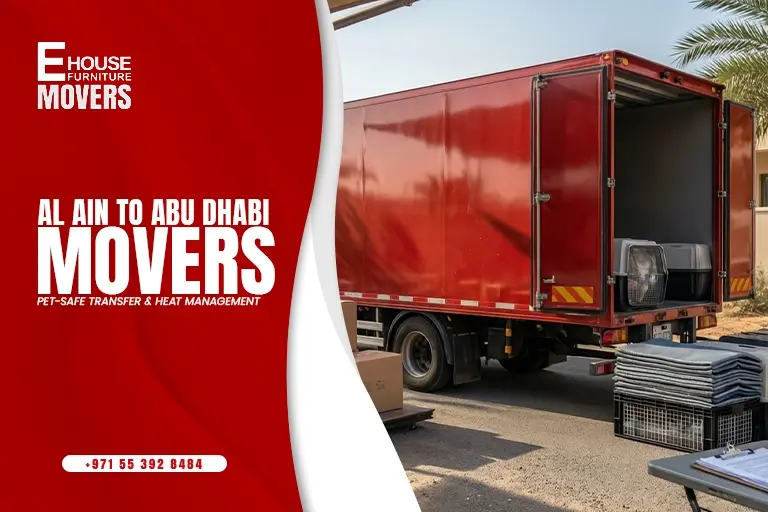
خزينة من العين إلى أبوظبي يتطلب نقل الحيوانات الأليفة وقتًا مبكرًا أو متأخرًا للسفر ، وظروف السيارة التي يتم التحكم فيها بالحرارة ، وصناديق الحيوانات الأليفة ذات التهوية ، وفترات الراحة المجدولة ، وفحوصات الترطيب المستمرة ، وغرفة وصول هادئة ومكيفة الهواء لأن الحيوانات الأليفة معرضة بشدة للضغط الحراري على الطرق السريعة في الإمارات العربية المتحدة.
يتضمن هذا الدليل جميع التفاصيل التشغيلية والرفاهية والبيئية والإجرائية المطلوبة لحماية الحيوانات الأليفة أثناء عملية النقل.
لماذا تعتبر إدارة حرارة الحيوانات الأليفة أمرًا بالغ الأهمية خلال العين Dhabi أبوظبي تتحرك
التعرض للحرارة هو الخطر الصحي الأساسي على الحيوانات أثناء النقل إلى الإمارات العربية المتحدة.
الحيوانات الأليفة تنظم درجة الحرارة أقل كفاءة من البشر. الكلاب تعتمد على اللعاب تعتمد القطط على الحد الأدنى من الغدد العرقية. ويتجاوز ممر العين الصحراوي بانتظام العتبات الآمنة. يمكن أن يحدث الإجهاد الحراري حتى مع التعرض القصير داخل المركبات أو مناطق التحميل أو أثناء التوقف.
عوامل الحرارة الحرجة على هذا الطريق
- حرارة الصحراء بين العين wei سويحان Dhabi أبو ظبي
- ارتفاع درجة حرارة المقصورة أثناء توقف قصيرة
- درجة حرارة الأسفلت الساخنة بالقرب من مناطق وقوف السيارات
- الرطوبة بعد الظهر تزداد قرب المناطق الساحلية في أبوظبي
- تراكم الحرارة داخل الصناديق أثناء تدفق الهواء البطيء
يجب التخطيط لإعداد الحرارة علميا ، وليس بشكل تفاعلي.
توقيت الطقس وتخطيط الطريق للسلامة الحرارية
الوقت الأكثر أمانًا لنقل الحيوانات الأليفة هو قبل الساعة 7:30 صباحًا أو بعد الساعة 6:30 مساءً ، عندما تكون درجة حرارة سطح الطريق وتراكم حرارة المقصورة أقل.
تشهد العين تدفئة سريعة في الصباح. تشهد أبوظبي ارتفاعًا في الرطوبة في وقت متأخر من بعد الظهر. المحركون يجب مزامنة المغادرة لتجنب كليهما.
اعتبارات المسار
- الاستخدام إي 22 (العين Road طريق أبوظبي) لأنه يوفر تدفق هواء أكثر سلاسة وعدد أقل من أقسام التوقف.
- تجنب التوقف لفترات طويلة في المناطق الصحراوية المفتوحة.
- بارك فقط تحت الظل عند التوقف للترطيب.
- ضبط التوقيت حول ذروة حركة المرور في عطلة نهاية الأسبوع ، مما يزيد من وقت السفر والحمل الحراري الداخلي للمقصورة.
قبل نقل البيطرية وإعداد الصحة
يجب أن تخضع جميع الحيوانات الأليفة لتقييم صحي قبل الحركة ، وخاصة سلالات brachycephalic ، والحيوانات الكبيرة ، والحيوانات الأليفة البدينة ، والحيوانات التي تعاني من مشاكل في الجهاز التنفسي.
الإعداد البيطري
- مراجعة اللقاحات الأساسية وحمل السجلات المحدثة.
- تقييم قدرة التنفس للسلالات قصيرة الأنف.
- اسأل الطبيب البيطري عن الأدوية المضادة للغثيان للحيوانات الأليفة الحساسة للحركة.
- تأكيد حالة الترطيب قبل النقل.
إرشادات التغذية
- لا تطعم وجبة كبيرة خلال 3-5 ساعات من السفر.
- تناول وجبة خفيفة في الليلة السابقة.
- توفير المياه النظيفة 2-3 ساعات قبل المغادرة.
سلامة قفص: الحجم والتهوية والاستقرار وجودة المواد
سلامة قفص يحدد سلامة الحيوانات الأليفة خلال الرحلة بأكملها.
متطلبات حجم قفص
- يجب أن تقف الحيوانات الأليفة في وضع مستقيم دون لمس السقف.
- يجب أن تتحول الحيوانات الأليفة بسهولة داخل قفص.
- هناك حاجة إلى مساحة إضافية للسلالات brachycephalic.
قواعد التهوية
- الحد الأدنى لتدفق الهواء من ثلاثة جوانب.
- لا نسيج يغطي مناطق تدفق الهواء.
- استخدم أغطية الصناديق فقط في الأعلى / الخلف للظل ، وليس على شبكات التهوية.
الاستقرار داخل السيارة
- يجب تأمين قفص مع الأشرطة أو الحصير عدم الانزلاق.
- يجب أن لا تميل قفص، تمايل، أو الانزلاق أثناء المنعطفات.
- لا تكدس الصناديق أبداً
أرضيات
- استخدام منصات ماصة.
- استخدام الفراش الناعمة التي لا فخ الحرارة المفرطة.
- استخدام منصات التبريد هلام ملفوفة في النسيج رقيقة (وليس الأسطح الجليدية).
نظام تبريد السيارة: الإعداد الهندسي للسفر الآمن للحيوانات الأليفة
يجب أن تظل درجة حرارة المقصورة بين 20 و 25 درجة مئوية طوال الرحلة.
خطوات إعداد السيارة
- قبل تبريد المقصورة لمدة 10-20 دقيقة قبل تحميل الحيوانات الأليفة.
- تعيين فتحات AC لتدفق الهواء غير المباشر للتبريد لطيف.
- مراقبة ميزان الحرارة الداخلي باستمرار.
- إبقاء النوافذ مغلقة للحفاظ على ضغط التبريد.
- تجنب إغلاق التيار المتردد المفاجئ أثناء التحميل / التفريغ.
إدارة تدفق الهواء
- خلق تدفق الهواء ثابت حول قفص.
- لا تضع الصندوق أمام ألواح النوافذ الساخنة.
- تجنب جيوب الهواء الساخن بالقرب من أقسام الجذع من سيارات الدفع الرباعي.
خطة التبريد في حالات الطوارئ
- حمل المراوح القابلة لإعادة الشحن المحمولة كنسخة احتياطية.
- حمل زجاجات رذاذ الماء البارد للتغشية آمنة.
- Carry insulated ice packs for indirect cooling (wrapped).
Cool-Down Break Protocol (Every 60–90 Minutes)
Cool-down breaks reduce heat buildup and stabilize breathing.
Break sequence
- Park in shade immediately.
- Keep AC running if pets stay in vehicle.
- If taking pets out:
- Leash before opening crate.
- Move to shaded ground.
- Offer small amounts of water.
- Wipe paws and belly with cool water.
- Allow 5–7 minutes for mild recovery.
Hydration rules
- Small, frequent sips only.
- Avoid overwatering to prevent vomiting.
- Replace water with chilled (not cold) supply during summer.
Heatstroke Prevention & Emergency Response
Heatstroke is a medical emergency that requires immediate cooling and professional veterinary care.
Early indicators
- Rapid, heavy panting
- Thick drooling
- Red or pale gums
- Lethargy or collapse
- Vomiting
- Uncoordinated walking
Emergency response
- Move pet to AC room or shaded area immediately.
- Wet towel on neck, chest, paws.
- Provide small sips of water.
- Do not apply ice directly.
- Transport to nearest emergency vet promptly.
Species-Specific Travel Safety
Dogs
- Require more airflow.
- Benefit from slight crate covering for shade.
- High-energy dogs must be kept calm to avoid overheating.
Cats
- Prefer darker crates with minimal external stimulation.
- Stress increases respiratory rate; keep handling minimal.
- Use pheromone sprays only if vet-approved.
Birds
- Must be transported in well-covered, ventilated carriers.
- Avoid drafts directly on feathers.
- Keep away from loud noise and sudden jolts.
Small mammals (rabbits, hamsters)
- Extremely heat-sensitive.
- Require constant cooling and shade.
- Must not be left in direct sunlight even for seconds.
Multi-Pet Transport Protocol
Multi-pet trips must follow strict separation rules.
Requirements
- Separate crates for each pet unless pair-bonded small animals.
- Position cats and dogs in opposite ends of vehicle.
- Monitor each crate individually for breathing rate and stress.
- Assign one staff member to pet monitoring only.
Behavioral Management to Reduce Stress & Heat Load
Stress increases body temperature and oxygen demand.
Stress-reduction techniques
- Avoid loud music.
- Use slow driving patterns.
- Maintain crate cover on top/back only.
- Minimize talking near crate if pet is anxious.
- Keep unfamiliar scents to a minimum.
Al Ain to Abu Dhabi Route Conditions That Affect Heat Safety
Heat zones
- Al Ain desert edge
- Sweihan desert belt
- Abu Dhabi outskirts near Al Wathba
Environmental risks
- Hot crosswinds increase dehydration
- Sand-dust irritates respiratory tracts in sensitive pets
- Highway asphalt temperature may exceed 50°C
Operational adjustments
- Park on sand, not asphalt, when possible
- Avoid long exposure at petrol stations with no shade
- Use shaded refueling stops
Arrival Protocol: Quiet, Controlled, Air-Conditioned Room
Pets must be brought directly into a quiet, cool room upon arrival.
Quiet room requirements
- AC at 20–24°C
- Curtains closed or lights dimmed
- Water bowl placed in accessible corner
- Pet’s bedding and familiar items ready
- Door closed to avoid escape during unloading
- No children or other pets for first 1–2 hours
Arrival sequence
- Carry crate directly from vehicle to quiet room.
- Allow 10–20 minutes inside crate to decompress.
- Open door slowly.
- Offer water.
- Allow rest before full exploration.
Species-specific arrival notes
- Cats may hide for several hours; do not force interaction.
- Dogs adjust faster but need a calm rehydration period.
- Birds must rest in low-light, stable temperature immediately.
Legal, Documentation & Community Rules
Carry necessary documents
- Vaccination card
- Microchip record
- Recent vet health certificate
- Owner ID
- Community/landlord pet approval (if required)
Gated communities in Abu Dhabi
- Some require pre-notification
- Some require pet ID during entry
- Some restrict certain breeds
Movers must coordinate entry in advance to avoid delays that increase heat exposure.
Full Safety Checklist for Movers
Before the move
- Verify forecast
- Pre-cool vehicle
- Inspect crates
- Prepare water and cooling supplies
- Confirm documents
During the move
- Maintain steady AC
- Use safe crate placement
- Perform cool-down breaks
- Monitor stress indicators
- Keep timeline strict
On arrival
- Move pets to quiet room immediately
- Provide water
- Allow rest
- Start unpacking only after pet stabilization
الملخص النهائي
A safe Al Ain to Abu Dhabi pet move depends on temperature control, correct crate ventilation, early/late departure, cool-down breaks every 60–90 minutes, constant hydration, separation of species, and quiet-room arrival planning.
Strict transport timing, careful vehicle preparation, and continuous behavior monitoring eliminate the main heat-related risks during UAE pet relocation.
الأسئلة الشائعة
How can pets stay safe during an Al Ain to Abu Dhabi move?
What is the best time to move pets from Al Ain to Abu Dhabi?
What type of crate should be used for pet transport in the UAE?
How often should pets get cool-down breaks during the trip?
What are the signs of heat stress in pets during a move?
What should be prepared at the Abu Dhabi home before pet arrival?
Sarmast Baloch is a distinguished content strategist and industry writer with multiple years of specialized expertise in the self storage and residential relocation sector. ويعكس عمله قيادة عميقة لنقل اللوجستيات، والتخزين الأمثل، واستراتيجيات إعادة توطين المستهلكين، مما يؤدي باستمرار إلى توفير محتوى موثوق به ومستند إلى نظرة ثاقبة، مما يسد الفجوة بين معارف الصناعة وصنع القرار كل يوم. وعلى مر السنين، بنى سارماست سمعة قوية لتصميم روايات مدروسة بدقة، ومزودة ببيانات تمكن أصحاب المنازل والمستأجرين والأعمال التجارية من الاقتراب من إعادة التوطين بشكل واضح وثقة. واشتملت مساهماته التحريرية على طائفة واسعة من مواضيع النقل والتخزين، من تحليل التكاليف وتقييم البائعين إلى حلول لوجستيات إدارة الفضاء البعيدة المدى. صوت موثوق به في المشهد المتحرك والتخزين، (سارماست) يجلب مزيجاً نادرًا من التصلب التحليلي والقصّة الميسّرة لكلّ قطعة ينتجها، مما يجعله سلطة قيّمة في (إيهوس موفرز).
إدريس هو متخصص في الخدمات اللوجستية مع التركيز على نقل السكن وكفاءة سلسلة التوريد. مع خبرة واسعة في صناعة النقل ، فهو متخصص في سلامة النقل ، وتقنيات التعبئة المتخصصة للسلع عالية القيمة ، وإدارة الأسطول. وهو مكرس لتبسيط عملية النقل، وضمان التعامل مع كل عملية نقل مع التخطيط الاستراتيجي والرعاية القصوى.