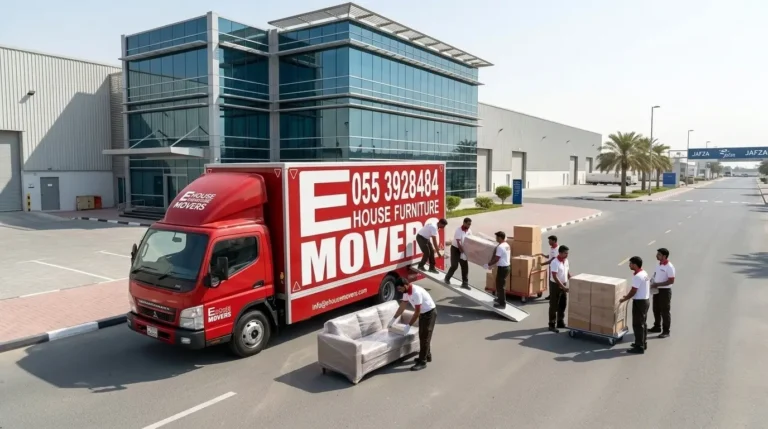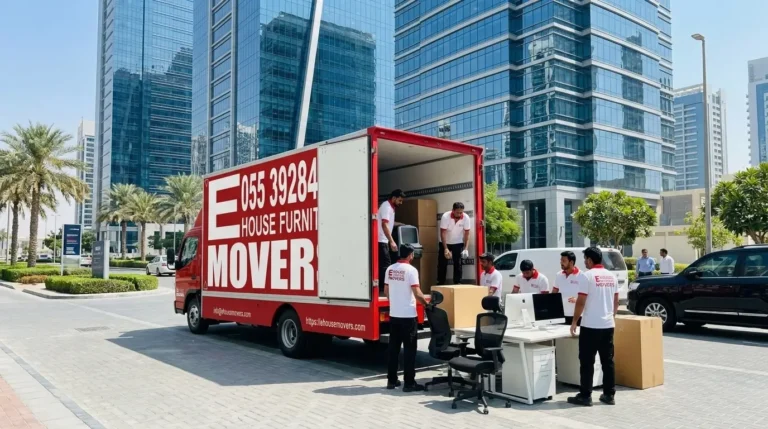



Office movers are specialized logistics service providers that handle the relocation of business equipment, furniture, technology infrastructure, and employee workstations from one location to another. In Dubai, where commercial real estate activity is high and business continuity is essential, selecting the right office moving company determines whether your relocation succeeds or disrupts operations.
The office relocation process involves complex coordination of timelines, specialized equipment handling, downtime minimization, and regulatory compliance. A vendor evaluation framework provides structured criteria to compare moving companies and identify which provider aligns with your operational requirements, insurance protections, and budget constraints. Office movers in Dubai deal with this complex process.
An effective evaluation framework separates capable vendors from those that create risk. The framework presented here covers 12 evaluation criteria based on licensing authority verification, team credentials, operational capacity, insurance standards, and track record measurement. These criteria address both operational competence and legal compliance required for office relocations in Dubai.
1. Does the Office Moving Company Hold a Valid DET Licence?

A valid DET (Department of Economic Development) licence, now registered through the Department of Economy and Tourism, is the primary legal requirement for moving companies operating in Dubai. This licence verifies that the company is formally registered with the emirate’s commercial authority and meets baseline operational standards.
To verify DET licence validity:
- Visit the General Directorate of Residency and Foreigners Affairs (GDRFA) business registry or the Department of Economy and Tourism website
- Enter the company’s trade licence number
- Confirm the licence is active (not expired or suspended)
- Check the licence category specifies “transportation” or “movers and packers”
Red flag: Any moving company unable to provide a licence number or reference, or one whose licence shows a different business category (such as general trading), signals operational illegality or misrepresentation. Companies operating without verified DET registration cannot legally provide moving services in Dubai and expose you to liability if cargo is damaged or lost.
2. Is the Company Registered for RTA (Roads and Transport Authority) Permits?

RTA permit registration confirms that the moving company operates compliant commercial vehicles and holds the required approvals to transport cargo across Dubai’s road network. The RTA regulates vehicle licensing, route authorization, and cargo weight compliance for all commercial transport activities.
RTA compliance means:
- Commercial vehicles are registered in the company’s name with valid RTA licensing
- Vehicles undergo mandatory safety inspections and emissions testing
- The company maintains compliance with vehicle-specific weight limits and route restrictions
- Insurance coverage extends to RTA-regulated transport liability
Moving companies lacking RTA registration may operate with unregistered or personal vehicles, compromising insurance coverage if cargo damage occurs during transit.
3. Can the Moving Company Provide Transit Insurance Certification?

Transit insurance certificates document that the moving company carries third-party liability and cargo damage insurance meeting UAE insurance authority standards. This insurance protects your business against financial loss if equipment, furniture, or technology is damaged, lost, or destroyed during the relocation process.
Required transit insurance elements:
- Third-party liability coverage protecting against claims from damage to third-party property or injury during transport
- Cargo/all-risk coverage specifically protecting office equipment, furniture, and assets during transit
- Minimum coverage limits aligned with the total value of items being relocated
- Certificate of insurance issued by a licensed UAE insurance provider, showing the moving company as the policyholder or insured party
When requesting insurance certificates, confirm the policy is active and the coverage period extends through your entire moving timeline. Insurance expiration dates that fall before or immediately after your move create a liability gap.
4. Does the Company Employ IT-Specialist Technicians for Equipment Relocation?
IT-specialist technicians are trained personnel qualified to disconnect, pack, transport, and reconnect sensitive technology infrastructure such as servers, networking equipment, telecommunications systems, and data-storage devices. Office relocations frequently include critical IT assets that require expert handling to prevent data loss, system corruption, or operational interruption.
IT-specialist capabilities include:
- Safe data-center equipment handling including proper grounding, shock protection, and temperature management during transit
- Network infrastructure disconnection and reconnection with documentation of all cable connections and configurations
- Server and workstation setup at the new location, ensuring systems are operational before the business opens
- Backup and redundancy verification confirming that data integrity is maintained throughout the relocation process
Without IT specialists, moving companies may treat technology equipment as standard freight, risking physical damage, data corruption, or extended downtime. Verify that IT technicians are employees of the moving company, not external contractors added last-minute.
5. Does the Moving Company Offer Weekend and Public Holiday Availability?
Weekend and public holiday availability determines whether the moving company can schedule your relocation during off-business hours, minimizing operational disruption. Dubai businesses often prefer moving on Friday-Saturday to limit impact on the work week and employee productivity.
Availability considerations:
- Friday-Saturday moving windows allowing businesses to relocate over the weekend
- Late evening and night-shift operations (6 PM to 6 AM) accommodating 24-hour business environments
- Public holiday scheduling during UAE holidays when many businesses are closed, such as Eid Al-Fitr and Eid Al-Adha
- Flexibility around business peak periods such as seasonal commercial activity or regulatory compliance deadlines
Moving companies unable to offer weekend or extended-hours availability may force your business to choose between operational disruption during business hours or delayed relocation. Verify availability in writing before signing any contract.
6. Does the Company Assign a Dedicated Project Coordinator?

A dedicated project coordinator is a single point of contact assigned to manage all aspects of your relocation, from pre-move planning through post-move verification. This role centralizes communication, reduces confusion, and ensures accountability for timeline adherence and quality standards.
A dedicated coordinator’s responsibilities include:
- Pre-move site surveys at both origin and destination locations to identify space constraints, access points, and logistical challenges
- Detailed timeline planning coordinating with your business to schedule moving activities around operational constraints
- Real-time communication providing updates on moving progress and addressing issues immediately as they arise
- Post-move walkthrough verifying that all items arrived intact and are positioned correctly
Moving companies without a dedicated coordinator model may assign a different person to each stage of your move, creating communication gaps and delaying issue resolution. A single coordinator ensures continuity and accountability.
7. Does the Moving Company Conduct On-Site Pre-Move Surveys?
On-site pre-move surveys are detailed physical assessments of both the origin (current) and destination (new) office locations, documenting space dimensions, access points, infrastructure constraints, and special handling requirements. These surveys form the foundation for accurate cost estimation and logistics planning.
Pre-move survey elements include:
- Origin location assessment measuring doorways, hallways, elevators, and parking access; identifying obstacles or structural constraints
- Destination location assessment confirming space availability, infrastructure readiness (electrical outlets, network connectivity, climate control), and layout specifications
- Equipment inventory documentation listing all items to be moved, their current condition, and special handling requirements
- Access and logistical planning identifying optimal routes, loading/unloading zones, and timing to minimize disruption
Moving companies offering only phone quotes without on-site surveys often underestimate complexity, resulting in unexpected cost increases, timeline delays, or scope changes during the actual move. An on-site survey eliminates estimation gaps.
8. Will the Moving Company Provide a Written Fixed-Price Quote?
A written fixed-price quote is a binding document specifying the total cost, scope of work, timeline, and terms of the moving service without additional charges regardless of actual hours or resources used. Fixed pricing eliminates cost uncertainty and protects against billing surprises.
A comprehensive fixed-price quote must include:
- Detailed scope of work listing all services included (packing, loading, transport, unloading, unpacking, placement)
- Total project cost with no hidden fees or hourly rate contingencies
- Timeline and moving date(s) specifying start and completion dates
- Insurance and liability limits documenting coverage for cargo damage or loss
- Payment terms defining deposit amounts, payment schedule, and accepted payment methods
- Cancellation and rescheduling policy addressing changes to the moving date or scope
Any quote structure offering only hourly rates or estimates with caveats such as “plus additional charges” indicates incomplete planning or intentional ambiguity. Demand a written fixed-price agreement before committing financially.
9. Can the Company Provide References from Previous Office Relocations?
References from previous office relocation clients provide direct evidence of the moving company’s operational quality, reliability, and adherence to timelines and budgets. Contacting references allows you to verify claims and identify any patterns of issues before engaging the vendor.
When requesting references, ask specifically for:
- Recent office relocation projects completed within the past 12 months
- Companies of similar size and complexity to your relocation scope
- Contact information for direct references (project manager or facilities manager who directly managed the relocation)
Questions to ask references:
- Did the moving company complete the relocation on schedule and within the quoted budget?
- Were there any equipment damages, lost items, or post-move issues?
- How responsive was the project coordinator to questions or changes?
- Would you use this company for future relocations?
Moving companies unable to provide verifiable references, or whose references report delayed timelines, budget overruns, or damaged equipment, should be eliminated from consideration. References indicate operational reality, not marketing claims.
10. Are Google Reviews and Industry Ratings Consistent with Company Claims?
Google reviews and independent industry ratings provide transparent feedback from customers who have directly experienced the moving company’s service. Review platforms aggregate multiple customer experiences, revealing patterns in service quality, reliability, and customer satisfaction.
Evaluation criteria for reviews and ratings:
- Minimum review volume (at least 15–20 reviews on Google Business Profile) indicating sufficient customer experience
- Average rating of 4.5 stars or higher, indicating consistent positive feedback
- Recent reviews (within the past 6 months) confirming current operational standards, not historical performance
- Review consistency showing recurring praise or complaints—patterns indicate systemic strengths or weaknesses
- Detailed feedback describing specific experiences (timeline adherence, equipment damage, coordinator responsiveness) rather than generic praise
Be cautious of:
- Very new companies with minimal review history, indicating unproven track record
- Disproportionate one-star reviews citing specific recurring issues (damaged equipment, missed deadlines, unprofessional conduct)
- Generic or identical reviews suggesting potentially fabricated feedback
- No response to negative reviews indicating unwillingness to address customer concerns
Google reviews serve as a market-validated quality indicator. A company with strong, detailed reviews from recent customers demonstrates accountability to customer satisfaction.
11. Does the Company Use In-House Staff or Subcontracted Crews?
In-house staff refers to permanent employees of the moving company trained in the company’s operational standards, while subcontracted crews are independent workers hired on a project basis who may lack consistent training or accountability. The distinction affects quality consistency, liability responsibility, and service reliability.
In-house team advantages:
- Consistent training ensuring all team members follow the company’s operational and safety standards
- Direct accountability linking crew performance directly to the moving company’s reputation and contract obligations
- Quality continuity across multiple projects, with recurring crew members building experience with your company’s processes
- Insurance responsibility clearly assigned to the moving company for crew conduct and negligence
Subcontracted crew risks:
- Variable quality dependent on external workers unfamiliar with your company’s standards
- Accountability ambiguity where responsibility for damage or poor conduct may be disputed between the moving company and subcontractor
- Training variability with no guarantee that subcontractors meet professional standards for equipment handling or professional conduct
Ask directly whether the moving company uses in-house crews for all aspects of your relocation or supplements with subcontracted labor. In-house teams indicate higher operational standards.
12. What Claims Settlement and Service Level Agreement (SLA) Terms Does the Company Offer?
A Service Level Agreement (SLA) defines the moving company’s commitments regarding timeline completion, equipment handling standards, and procedures for addressing claims or disputes if service fails to meet specifications. An SLA creates contractual enforceability for service quality and establishes recourse if the company underperforms.
Essential SLA components include:
- On-time completion guarantee specifying penalties or remedies if the moving company fails to meet agreed timelines
- Equipment damage liability limits defining the company’s maximum financial responsibility if items are damaged or lost
- Claims settlement procedure outlining the process for reporting damage, submitting evidence, and receiving compensation
- Timeline for claims processing specifying how long the company has to acknowledge claims and issue payment
- Dispute resolution mechanism such as mediation or arbitration if disagreement arises over damage assessment or liability
Moving companies offering generic or vague SLAs that limit liability to nominal amounts (such as “AED 100 per item maximum”) are shifting risk entirely to you. Negotiate SLA terms that align liability with the actual value of equipment being relocated.
Sarmast Baloch is a distinguished content strategist and industry writer with multiple years of specialized expertise in the self storage and residential relocation sector. His work reflects a deep command of moving logistics, storage optimization, and consumer-facing relocation strategies, consistently delivering authoritative and insight-driven content that bridges the gap between industry knowledge and everyday decision-making. Over the years, Sarmast has built a strong reputation for crafting meticulously researched, data-informed narratives that empower homeowners, renters, and businesses to approach relocation with clarity and confidence. His editorial contributions span a broad spectrum of moving and storage subjects, from cost analysis and vendor evaluation to long-distance logistics and space management solutions. A trusted voice in the moving and storage landscape, Sarmast brings a rare combination of analytical rigor and accessible storytelling to every piece he produces, making him an invaluable authority at eHouseMovers.com.
Idris is a logistics specialist with a focus on residential relocation and supply chain efficiency. With extensive experience in the moving industry, he specializes in transit safety, specialized packing techniques for high-value goods, and fleet management. He is dedicated to streamlining the moving process, ensuring that every relocation is handled with strategic planning and maximum care.